


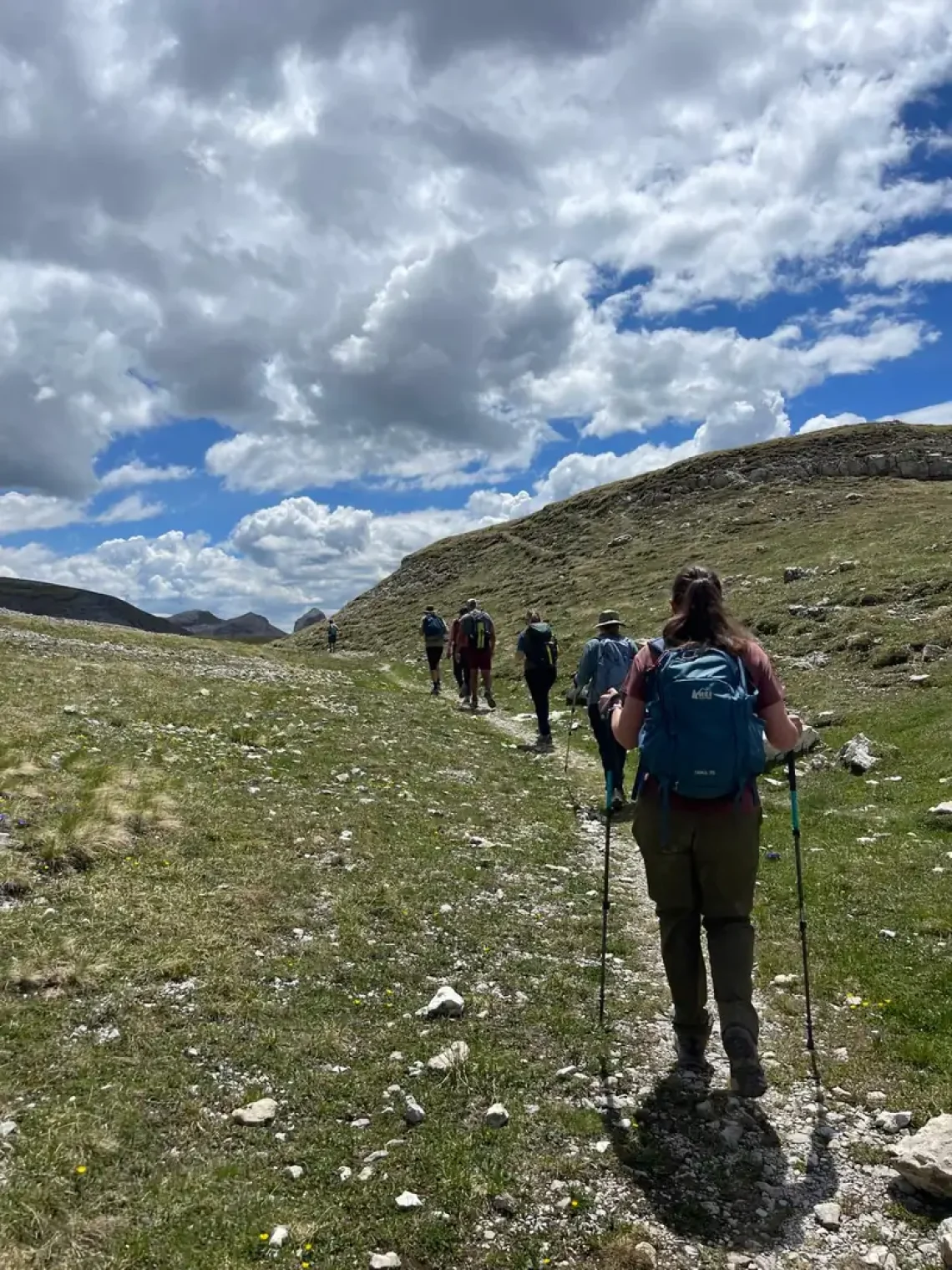
Do you remember the last time your feet thanked you after a long walk? Or that time you finished a trail with your heels completely battered? Hiking shoes are the only point of contact between you and the trail: choosing the right pair is not a detail, it’s the foundation of every enjoyable hike.
There is no such thing as the best hiking shoe for everyone. The right shoe depends on who you are, where you go, and how you walk. The season matters, the type of terrain matters, and the shape of your foot matters. The goal is not to find the shoe worn by champions, but the one that works best for you, in the environment where you actually hike.

Three Categories, Three Uses
There are generally three types of hiking footwear: low-cut, mid-cut, and high-cut shoes (also known as hiking boots). Here are the main characteristics of each.
- Low-cut: lightweight and flexible, they are suitable for well-marked trails that are not too demanding, as well as hikes lasting only a few hours. An excellent choice for beginners who do not want to carry extra weight.
- Mid-cut: the most versatile category. The medium-height collar provides partial ankle support without sacrificing mobility. They are the most popular choice among regular hikers.
- High-cut: maximum ankle protection, a stiffer sole, and greater weight. They are essential on technical terrain, in the mountains, or when carrying a heavy backpack. However, they can also be the right choice for beginners who want extra protection against ankle sprains.
The Sole: Where Everything Happens
It’s all about balance. Not only because if the sole does not provide enough grip, you will be in trouble on the first slippery surface, but also because you need to find the right compromise between stability, flexibility, and cushioning. The industry benchmark is the Vibram sole: deep, well-spaced lugs provide excellent grip on wet soil, clay, and damp rock. However, pay attention to stiffness: it increases protection on rocky terrain but can feel less comfortable on softer trails.
Upper Materials and Waterproofing: GTX or Not?
The Gore-Tex membrane keeps water out but is less breathable. In summer, a foot enclosed in a GTX shoe can overheat, increasing the risk of blisters. A practical rule of thumb: GTX is a good choice in autumn, winter, and spring; in summer, especially on dry trails, it is worth considering whether you really need it. If waterproofing is a priority but you still want breathability, alternative membranes such as eVent or OutDry are available.
Fit: Size Matters More Than the Model
You can buy the most expensive hiking shoe on the market, but if it does not fit properly, it will still be the wrong shoe. Fit is everything. If possible, follow these golden rules: try your shoes on in the evening, because your feet naturally swell throughout the day and even more during a hike; wear your technical hiking socks, as their thickness affects the fit; check the space at the front of the shoe, leaving at least half a centimetre between your longest toe and the tip of the shoe (you will appreciate it on downhill sections!). Finally… lace them up firmly and walk around: your heel should stay securely in place, without moving up and down.
In Summary: Four Things to Keep in Mind
A quick recap to help you avoid mistakes.
Intended use: easy trails or technical terrain? Short hikes or multi-day treks? The answer determines the right category and level of stiffness.
Comfort first: an uncomfortable shoe will not become comfortable after breaking it in, and it certainly will not make you want to hike.
Proper fit: try shoes on in the evening, with your hiking socks, making sure there is enough room in the toe box and that your heel remains stable.
Season and terrain: a breathable shoe without a membrane may be more suitable than a Gore-Tex model in the middle of summer. Think about the conditions, not the shoe in isolation.
And remember: no hiking shoe is ready for a demanding hike straight out of the box. Your first two or three outings should be short and easy. Your shoes and your feet need a little time to get acquainted.

Now All That’s Left Is to Start Walking
Choosing the right hiking shoes is the first step towards a truly enjoyable hiking experience. Once you have found the perfect pair (for you), nature is waiting. Especially here in Tuscany, among vineyards and olive groves, medieval villages, wineries, and unforgettable landscapes. At WeHike, we guide you in discovering this extraordinary region with routes suitable for all levels, expert guides who know every trail, and… paths for every kind of hiking shoe!